06/02/2026: The Next Chapter

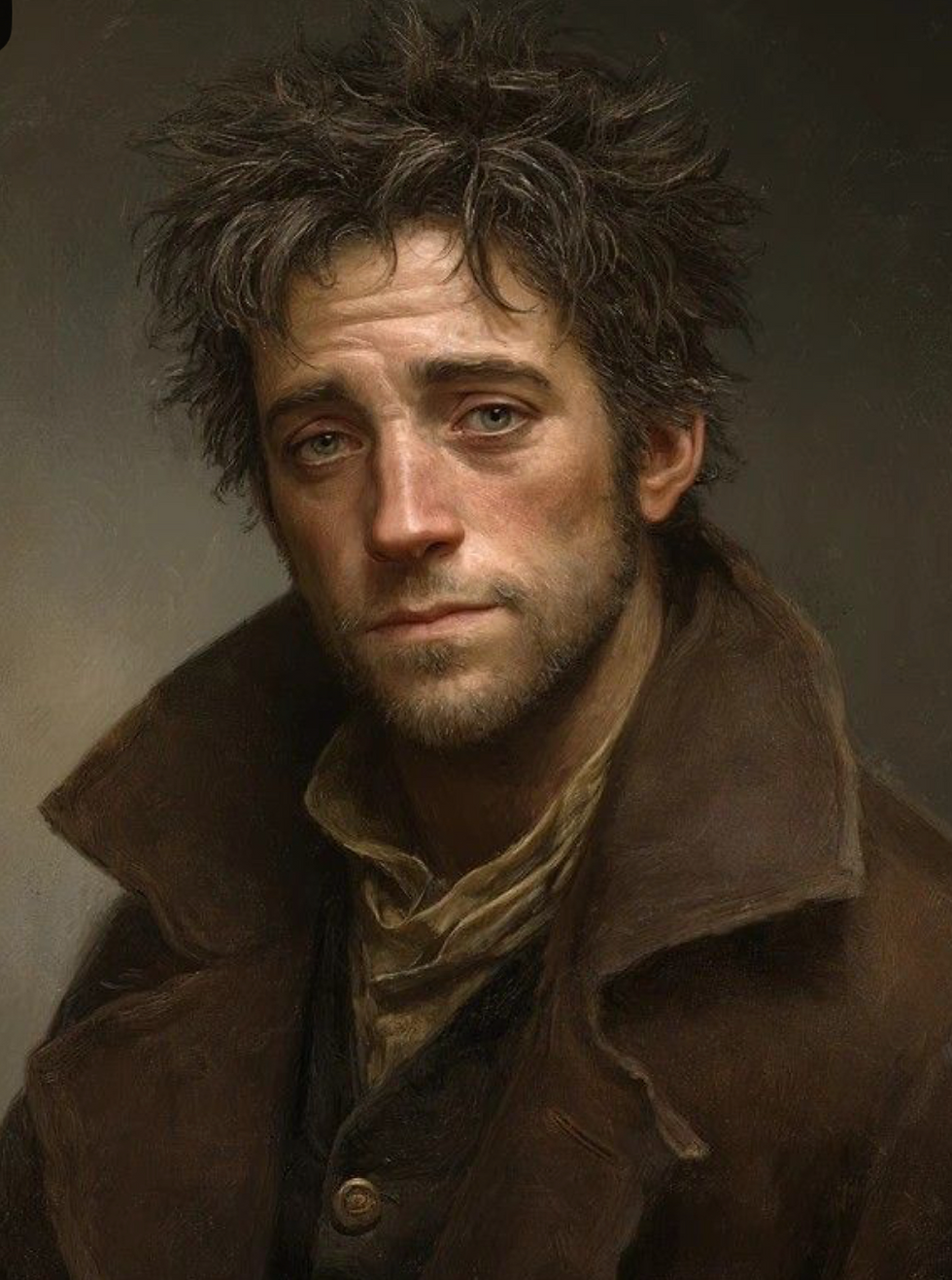
The wagon smells of old wine and worry. And it is making Shifty feel terribly unwell. The next chapter of their adventure has started unpleasantly for him.
It is early morning when the party pulls away from the vineyard and the Barovian mist sits low and cold across the road. Shifty is in a deeply pitiable state. He sits hunched against the wagon's side rail, scales the grey-green of pitted copper, looking every inch like something a cat dragged in. The fresh air does not help him. The swaying of the wagon does not help him.
Biblo, who is responsible for the tiny, young kobold's current condition, has the good sense to sit at the far end of the wagon and say very little.
The journey to Kresk is uneventful, which in Barovia constitutes something close to a miracle. The road winds through pine forest and pale fog, and nothing attacks them. Nothing lunges from the treeline. No wolves. No druids. No vampires on horseback appearing out of the dark to ruin the afternoon. They arrive in the little walled village without incident, the gates swinging open, the silence of the place settles around them beneath the overcast sky.
⚔
Kresk is small and quiet and half-empty, its unpaved streets clean under a fresh blanket of snow, its houses modest. Ilya is thrilled to be home. He chatters all the way through the gate, bright-eyed and animated, pointing out which abandoned cottages might suit Mr. Ratrick very nicely for when they are in Kresk between their adventures — this one has a good garden, that one has a sturdy roof — he is already designing a future in which he spends some nights here and some nights on the road with Ratrick and everything is lovely and safe and arranged exactly to be with all of the people he loves, given hi current nomadic lifestyle with the rogue.
Ratrick listens to all of this. Then he asks to speak with Ilya's parents.
They are brought inside. Tea is served to Ratrick and Ilya is sent off to find his friends. The ratling wastes no time in explaining what Exethanter shared — the prophecy, the cold certainty of it, with the finding of the empty coffin in the treasure room. It bore the boy's name. His mother pours with hands that are just slightly trembling. Her composure lasts about thirty seconds before she excuses herself. "I cannot listen to any more of this. I cannot bear to lose him. He is our only child!" She goes into the other room and does not come back. Ratrick can hear her quiet weeping behind the closed door.
Ilya's father regards the ratling across the scarred table. He asks, very quietly, what must be done to protect his son. Ratrick explains what he has decided: that he intends to remain in Kresk. That Ilya should not continue adventuring: that the world the boy has been traveling through is not safe for him, and perhaps never was.
"I know this is a great disruption for you," says Ilya's father. "You have treated him very well. You are welcome here. Any of these empty houses — any of them — take your pick. Take all the time you need."
Ratrick thanks him. He says, simply, that he thinks he could use a quieter life.
Outside, a small boy is teaching his friends a card game he learned from a ratling, and does not yet know that anything has changed.
⚔
The road up to the Abbey of Saint Markovia is steep and switchbacked, and Crystal handles the wagon with the particular confidence of someone who will not admit how alarming the drop on one side is. They make it to the top without incident and pass through the Abbey's iron gates into a courtyard that smells of stone and cold air and something else — something difficult to name, animal and strange.
Soulfire and Nike have not been here before. They are about to understand why everyone else seems quietly tense.
The creature who opens the gate has a wolf's face. He has one duck foot and one human hand and a wing that ends in fingers, like someone assembled him from spare parts of different creatures. He leads them through without comment, which is somehow worse than if he had said something.
Inside the main hall, they are greeted by Yoshi — an enormous polar bear warrior who stands twelve feet tall on two legs and moves with the unhurried manner of one who has never feared anything. He informs them, with great courtesy, that the Abbot will be down shortly, and offers a refreshment. Biblo requests some. Yoshi disappears to find it, navigating the doorframe with practiced efficiency.
Nike watches a creature with fish-gills and a cat's paws shuffle past carrying linens. Soulfire, very quietly, questions where they are. Nike has no answer that would be comforting. She is not entirely sure herself. This is also her first visit to the Abbey of St. Markovia.
Then the Abbot descends the stairs. The room grows a little brighter without any light source changing — the particular radiance of something celestial, soft as diffused summer sun. It pools around him like a second skin. He is tall and still, and looks at each of them in turn with the patient attention of someone who has been alive for a very long time.
He is immediately drawn to Soulfire.
"What are you doing in this plane, my child?"
Uncomfortably, Soulfire explains, with as much composure as she can muster, that she has come with these new friends on a quest and does not intend to destroy anything. The Abbot receives this with polite skepticism. He notes that he knows most of the group quite well — except the one with the two-colored hair, Nike, who is, he observes, elf-kind. The conversation achieves an impressive level of awkwardness in a very short time, and ends when the Abbot offers Soulfire a blessing, which she accepts.
He turns, then, and sees Shifty.
"My poor child," he says, with what sounds like genuine compassion to the bilious kobold. "You are unwell."
He offers a Lesser Restoration, a spell that will clear the effects of alcohol. Shifty accepts gratefully. The Abbot places one hand gently on the kobold's forehead, and the hangover dissolves — the nausea, the pounding headache, the general sense that the inside of one's skull has been replaced with wet sand. It is immediate and total and remarkable.
Shifty blinks. He feels, for the first time in hours, like himself.
He then bites Biblo.
⚔
Biblo bellows. It is not quite a shout — it is something below a thunderclap but above a shout, a sound that echoes through the tall space and up the stairs, rattling the windows in their frames. The mongrelfolk in the adjacent rooms go very quiet.
Shifty is attached to Biblo's hand with a determined grip. He is wearing his new Fangs of Venom, and is delighted to find they are just as sharp as he'd hoped.
Biblo, for his part, manages to fight off the effects of the poison — a reflection more of his constitution than of the situation being fine — and retaliates with the only weapon immediately to hand, which is a bag of caterpillars he acquired on the road up from Kresk. The bag connects with Shifty's head and bursts open, scattering caterpillars across the stone floor in a wide and enthusiastic radius.
There is a long moment of silence.
Shifty releases Biblo's hand. He surveys the caterpillars. He begins, very methodically, to collect them.
The Abbot watches all of this, then says, thoughtfully, that he does not recall the kobold being a cannibal, but supposes things change. He turns to Nike.
"And you," he says. "Have you resolved your situation with the vampire?"
Nike allows that she has not. She is startled that the Abbot knows about this.
"I'll pray for you," says the Abbot. "It would be a sad thing if you became undead."
He does not sound as though he thinks it unlikely.
⚔
The Abbot takes Crystal's diamond and the resurrection ritual scroll without ceremony, examines them briefly, and announces he will require one assistant. Biblo volunteers. This is perhaps not the choice that recommends itself most strongly on reflection, but the offer is made before reflection has a chance to intervene.
They go upstairs to the Abbot's laboratory.
The smell reaches Biblo before the room does — the thick, sweet-rotten heaviness of meat that has been preserved not quite enough. The Abbot apologizes, briefly, for having neglected the Gentle Repose spell on two consecutive nights. The body laid out beneath a sheet on a long wooden table has not benefited from this oversight.
The Abbot scans the ritual before beginning. He hands Biblo a portion of the text and explains that his task is to chant.
They begin.
Below in the great hall, the rest of the party sits with their tea and their caterpillars and the sound of Biblo's voice drifting down through the ceiling, intoning syllables that were not designed for barbarian tongues but are gamely attempted regardless.
In the laboratory, the body jolts beneath its sheet, rattling tge diamond that rests upon its abdomen. Once, then again — a convulsive shudder each time the Abbot scatters herbs across the cloth, like something underneath receiving a series of electrical shocks. "Biblo," the Abbot says, quite calmly. "Keep chanting, please."
Downstairs, those who are paying close attention notice that the light through the stained glass windows has changed. Barovia has never had much to offer by way of sunlight — the sky runs to pewter and ash, the sun a rumor more than a presence — but what dim glow usually filters through has vanished entirely. It is the middle of the afternoon and it looks like the hours before midnight.
Crystal steps to the door and pushes it open: outside, the world is black, snow falling soft and silent through darkness so complete the stars should be visible were it not for the thick layers of cloud. Soulfire conjures Dancing Lights and fills the hall with warm, wheeling sparks. It helps with the visibility. It does not entirely help with the feeling.
Upstairs, the body sits up and screams.
It throws off the sheet. Its eyes are white and filmed, its skin the grey-green of old meat, and it is making toward Biblo's face with an expression that does not suggest friendly interest. Biblo attempts to hold it down. He fails. The body bites him — a proper bite, this one, significantly more committed than Shifty's — and Biblo takes the full tearing pull of it. His scaled hand begins to swell immediately.
"Abbot," Biblo sputters, releasing it and backing away from the zombie Lord Wachter. "I could use some help."
"I can destroy undead," the Abbot offers blandly, from a safe distance. "Shall I?"
The answer from upstairs and downstairs simultaneously is no. Crystal takes the stairs at a run. She gets her hands on the body — it is snarling, thrashing, snapping with the single-minded persistence is alarming — and holds it down. It bucks. She holds. Biblo pins the ankles. The Abbot, freed of the practical problem, returns to the ritual, rebalancing the diamond, now glowing, upon the creature's putrescent middle.
Outside, the darkness begins, almost imperceptibly, to lift.
Beneath Crystal's hands, the body's color starts to change. The grey-green drains away. Pink begins to gather at the cheeks. The filmed eyes clear, then clear again — the irises fill in, settling to a quiet blue. The chest moves. Rises. Falls.
The man on the table takes a deep, ragged breath, the first he has drawn in over a year, and opens his eyes on the ceiling of the Abbot's laboratory, and says:
"Where am I?"
The diamond is nowhere to be found.
⚔
He is younger than anyone expected — not yet out of his thirties, dark-haired, with the look of a man who was probably well-put-together before being dead for a year did its work. He sits up. He checks his hands. He looks around at the polar bear and the kobold and the dragonborn and the demon and the wolf, and at Biblo's swollen hand, and at the Abbot standing slightly to one side with the expression of a man who has seen worse, and says, with considerable dignity, "I would like to know what, exactly, is happening."
Nike tells him, gently but directly, that he died, and has been dead for approximately one year, and has only just now been restored to life.
Nikolai receives this information the way a man receives news that his house has burned down while he was on a short errand — with staggered, repeated incomprehension, each repetition slightly worse than the last. "But I was only just now on the battlefield," he stammers. "I must have struck my head. I was only asleep. I do not remember an afterlife. I was at the bakery just two days ago — I remember that." He points a finger at Nike, who shies away.
"A year ago," Biblo says.
Nikolai stares.
"One year," Nike repeats. "But you are back. Alive."
"That," says Nikolai Wachter, "is not much of a comfort."
Crystal shows him the resurrection scroll. It helps the way a document helps — it provides evidence, not comfort. He takes it. He reads it. He reads it again. The words are already fading. He sets it down carefully on the table beside him and then has to sit, because his legs are shaking. He is alive after being quite dead and has not yet decided how he feels about this.
He bathes, eventually, then dresses in clothing borrowed from the Abbot's considerable and somewhat mysterious wardrobe — pants slightly too long, a shirt slightly too wide, a heavy cloak he wraps around himself and doesn't take off. He comes downstairs. The Abbot has had his mongrelfolk servants bring out a pot of stew, which contains wild game. This is reassuring to everyone who was quietly concerned about what the alternative might be.
There is bread. There is butter. There is a fire. Pinecone accepts a bowl of rabbit, laps it up, and curls before the hearth.
Nikolai sits in the corner, clean and fed and alive, and stares at nothing, shaking his head with slow, almost rhythmic disbelief. Nike brings him something warm to drink and asks how he is processing things. He looks at her for a moment, then looks away.
"I think," he says, "that I may be going mad."
Nike tells him he is not. She sounds, for a moment, like someone who has considered this question from the inside and knows what it actually looks like.
Eventually he looks up and asks, very carefully, whether anyone will tell him something about his sons. "Are they well? My wife — someone has said she is a member of a cult. I wish to understand whether this is a joke."
The room finds itself extremely interested in the fire.
Ratrick tells him, before departing: "When we were last in Vallaki, weeks back, your sons were well. No one present here has any clear knowledge of a cult." This is technically true in ways that would not survive close examination, but it suffices. Nikolai Wachter — formerly dead Nikolai Wachter, as he introduces himself to Ratrick with a ghost of dry humor — shakes the ratling's hand and thanks him for his honesty.
Zilk says nothing about the business with Nikolai, junior. He prays that no one else thinks to mention it either. The kidnapping of the teen was ill-advised, he sees now, and best forgotten.
Nikolai does not close his eyes that night. He sits by the fire until the grey Barovian dawn comes creeping under the door, watches the darkness lift, and thinks about a year he cannot remember — about a wife waiting in Vallaki, about the vampire, and about what he intends to do now that he has been given, against all reasonable expectation, another chance.


Comments