10/20/2025: Tantlin

The acrid smell of brimstone hangs thick in the air as Kiki, Arman, Vali, and Reklaw secure their truck at the weathered pier, its ropes groaning against salt-rotted wood. The distant sounds of the Night Market call to them—a cacophony of shouting vendors, crackling fires, and the strange, discordant music of the damned.
They push through the crowds as twilight bleeds into full darkness. The Night Market sprawls before them. Its stalls are constructed from bones and rusted iron, merchants hawking everything from souls in bottles to weapons that whisper promises of violence. Lanterns filled with trapped fireflies—or perhaps something more sinister—cast everything in a sickly green glow.
“We need explosives,” Arman mutters, scanning the ramshackle shops. “Powerful ones.”
Kiki’s sharp eyes catch the telltale signs first: scorch marks on a reinforced stall, the distinctive smell of black powder mixing with sulfur. “There,” she says, pointing.
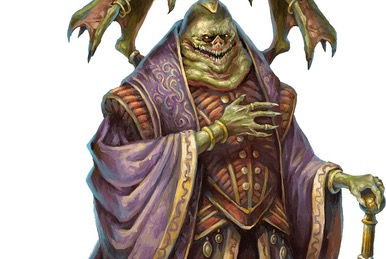
The arms dealer’s stall is fortified like a small fortress. Behind an iron-barred counter stands Kresh, an orc-like creature whose massive frame seems to absorb the lamplight. Their skin is the color of old ash, covered in ritual scars that glow faintly red. Arms thick as tree trunks and hands that could crush skulls move with surprising delicacy as they lay out their wares.
One by one, Kresh places one of each type of the explosives they sell on the scarred wooden counter: a small keg wrapped in iron bands that sloshes ominously, a perfectly spherical iron globe etched with arcane symbols, a glass vial filled with swirling orange liquid that seems alive, and a clay sphere packed with something that ticks softly.
“You want power?” Kresh’s gravelly voice is low. “I sell power. What kind of destruction do you seek?”
Vali leans forward, eyes gleaming with interest, but Arman places a subtle hand on their companion’s shoulder. The bard has a performance to prepare for—they can’t afford complications. Not yet.
Arman steps away from the group, melting into the crowd. When he returns moments later, his entire bearing has changed. The slouch is gone, replaced by the rigid posture of authority. His clothes seem different somehow—more official, more threatening. The disguise isn’t perfect, but in the dim light and chaos of the Night Market, it will do.
“You there!” Arman’s voice cracks like a whip as he approaches Kresh’s stall, his hand resting on the pommel of his weapon. “Kresh, isn’t it?”
The arms dealer’s eyes narrow, calculating. “Who asks?”
“I ask on behalf of the Chief of Stygia.” Arman produces a forged seal, letting it catch the light just long enough to seem authentic. “I require three kegs. Immediately.”
Kresh’s massive hands still. The temperature around the stall seems to drop several degrees. “Geryon?” The name comes out as something between a question and a challenge. “What needs Geryon of explosives?”
Arman doesn’t flinch. He leans forward, lowering his voice to convey urgency and confidentiality. “There’s been a mining collapse in the eastern tunnels. Several dozen people are trapped. The Chief has ordered us to extract them before—” he pauses meaningfully, “—before they become a different kind of problem.”
“Humans?” Kresh’s lip curls back, revealing teeth like yellowed daggers. The sneer in their voice could curdle milk. “Why cares Geryon for them? There are more always, arriving always on those ships of the damned.” The arms dealer’s laugh is harsh and humorless. “The Styx delivers fresh cattle every day. Let them rot. Let them dig themselves out. Or let them die. What’s the difference?”
The tension at the stall draws attention. A few other merchants glance over, curious but wary. Arman can feel sweat beginning to bead on his forehead—not from fear, but from the effort of maintaining the illusion.
“Nevertheless,” Arman says coldly, “those are my orders. Will you refuse the Chief?”
Kresh stares at him for a long moment, those burning eyes seeming to bore through flesh and bone, searching for deception. The air between them crackles with unspoken threat.
While Arman holds Kresh’s attention, Kiki moves like smoke through shadow. Her nimble fingers dance across the counter. The iron globes are heavier than they look, each one requiring careful balance and precise timing.
One. Slipped into the reinforced pouch at her hip.
Two. Tucked into the false bottom of her pack.
Kresh leans forward, still focused on Arman, one massive hand slamming onto the counter. “I think—”
Three. Four. Kiki’s heart hammers but her hands remain steady.
“—you’re lying.”
Five. The last globe disappears into her cloak just as Kresh’s eyes begin to slide toward the display.
“Then perhaps,” Arman says smoothly, taking a calculated step backward, “you can explain your reluctance to the Chief personally. I’m sure he’d be fascinated to hear it.”
Kresh growls, a sound that seems to come from somewhere deep in the earth itself. But the bluff works—or perhaps the arms dealer simply doesn’t care enough about one suspicious guard to escalate. “Get out of my stall.”
The party melts back into the crowd, hearts pounding, five iron globes heavier against Kiki’s body than any amount of gold.
⚔
The Shackled Soul Tavern rises like a snow cloud at the far end of the market district. Its walls are constructed from the timbers of wrecked ships, and chains—real iron chains—hang from every rafter, swaying gently though there is no wind. The sign above the door depicts a soul trapped in a bottle, eternally screaming.
Inside, the air is thick with smoke and the smell of spilled wine. Damned souls and devilish merchants alike crowd around tables, seeking a moment’s respite from the eternal frigid misery of Stygia.
Vali takes the small stage as if born to it. The room doesn’t quiet immediately—it never does in places like this—but as the first notes ring out, conversations begin to die. The bard’s voice is something otherworldly, reaching into the hollowed-out hearts of everyone present and reminding them of something they’ve lost. Hope, perhaps. Or beauty. Or simply the memory of a world where the sky isn’t always the color of a bruise.
The performance lasts nearly two hours. Vali weaves magic and music together, telling tales of heroes and the kraken they bested, of victories and noble defeats in other of the hellish realms. Some in the audience weep. Others sit frozen, transfixed. A few devils in the back look distinctly uncomfortable, as though the music is causing them actual pain.
When the last note fades, the silence holds for three full heartbeats before the tavern erupts in applause.
Timon, the tavern’s owner—a hunched figure whose face is hidden beneath a hood—approaches Vali with measured steps. “Four hundred years I’ve run this establishment,” Timon’s voice is surprisingly gentle, almost reverent. “Four hundred years of performances, and I’ve never heard anything like that.”
Negotiations are brief. Timon counts out the payment personally: 4,425 gold pieces in mixed currency, some coins so old they predate modern civilization. “You’ll perform here again,” Timon says. It isn’t quite a question. “Whatever your price.”
Vali smiles, exhaustion and satisfaction mixing in their expression. “We’ll see. If we survive what comes next.”
⚔
The good feeling lasts exactly as long as it takes them to return to the pier.
“No,” Reklaw says flatly, staring at the empty space where their truck had been. The ropes lie coiled on the dock like dead serpents. “No, no, no.”
“I secured it,” Arman protests. “Triple knots. That truck weighs three tons loaded—”
“Well it’s not here now, is it?” Kiki is already examining the dock, looking for clues, but nothing. No scorch marks. No clawed footprints. Nothing.
A high-pitched giggle makes them all spin around.
The imp is perched on a piling, no larger than a house cat, with leathery wings folded against its back and a tail that twitches with malicious amusement. Its eyes glow like coals in a dying fire.
“Lost something?” it asks in a voice like glass breaking.
“Where’s our truck?” Kiki’s hand moves to their weapon.
“Oh, that?” The imp examines its claws with exaggerated disinterest. “That’s been sent to the Chasm of Found Things. Everything lost in Stygia ends up there eventually. Well—” it grins, showing needle-sharp teeth, “—almost everything. Some things stay lost forever.”
“The Chasm of Found Things,” Vali repeats slowly. “Where?”
The imp points toward the horizon, where the landscape drops away into shadow. “Eight hours across the waste. If the cold doesn’t get you. Or the wind. Or the things that hunt in the dark.” It giggles again. “Good luck!”
And with a crack of displaced air and the smell of sulfur, it vanishes.
⚔
The sled rental operation is run by a devil with entrepreneurial aspirations and a complete lack of sympathy. The Stygian polar bear they lease is massive—twice the size of any natural bear, with fur the color of dirty snow and eyes that hold ancient, hungry intelligence. It regards the party with something between contempt and curiosity, as if trying to decide whether they’d be worth eating.
The waste stretches before them. Snow that isn’t quite snow falls from skies that aren’t quite clouds. The temperature plummets the moment they leave the relative warmth of the market district, cold enough to make breathing painful, to make exposed skin burn and crack.
Vali drives the bear. The others watch in shifts, two resting in the reinforced sled while one keeps watch. The landscape is endless and terrible in its monotony—white and gray and black, broken only by the occasional jutting rock formation or the frozen corpse of something that failed to survive the crossing.
In the third hour, they see shapes in the distance. Figures that might be travelers, or might be something worse. The shapes keep pace with them for many long minutes before finally disappearing into the snow. They pass over a tunnel of melted ice in the place they believe it was.
In the fifth hour, the bear becomes nervous.
“Something’s wrong,” Kiki says, watching the creature’s ears flatten against its skull. Its lips pull back from massive fangs, and a low growl rumbles from deep in its chest.
“What is it?” Vali asks, hand moving instinctively toward their instrument—magic and music intertwined.
Reklaw points. “There.”
The snow ahead erupts.
The remorhaz bursts from beneath the frozen waste. It’s enormous—forty feet of segmented, centipede-like body covered in chitinous plates that glow red-hot with internal fire. Steam rises from its body where snow touches its superheated carapace and instantly vaporizes. Its mandibles are the size of swords, clicking together with a sound like breaking bones.
The Stygian polar bear roars in challenge and fear, rearing up on its hind legs. It refuses to move forward.
The remorhaz’s multifaceted eyes fix on the party, alien and hungry.
The acrid smell of brimstone hangs thick in the air as Kiki, Arman, Vali, and Reklaw secure their truck at the weathered pier, its ropes groaning against salt-rotted wood. The distant sounds of the Night Market call to them—a cacophony of shouting vendors, crackling fires, and the strange, discordant music of the damned.
They push through the crowds as twilight bleeds into full darkness. The Night Market sprawls before them. Its stalls are constructed from bones and rusted iron, merchants hawking everything from souls in bottles to weapons that whisper promises of violence. Lanterns filled with trapped fireflies—or perhaps something more sinister—cast everything in a sickly green glow.
“We need explosives,” Arman mutters, scanning the ramshackle shops. “Powerful ones.”
Kiki’s sharp eyes catch the telltale signs first: scorch marks on a reinforced stall, the distinctive smell of black powder mixing with sulfur. “There,” she says, pointing.
The arms dealer’s stall is fortified like a small fortress. Behind an iron-barred counter stands Kresh, an orc-like creature whose massive frame seems to absorb the lamplight. Their skin is the color of old ash, covered in ritual scars that glow faintly red. Arms thick as tree trunks and hands that could crush skulls move with surprising delicacy as they lay out their wares.
One by one, Kresh places one of each type of the explosives they sell on the scarred wooden counter: a small keg wrapped in iron bands that sloshes ominously, a perfectly spherical iron globe etched with arcane symbols, a glass vial filled with swirling orange liquid that seems alive, and a clay sphere packed with something that ticks softly.
“You want power?” Kresh’s gravelly voice is low. “I sell power. What kind of destruction do you seek?”
Vali leans forward, eyes gleaming with interest, but Arman places a subtle hand on their companion’s shoulder. The bard has a performance to prepare for—they can’t afford complications. Not yet.
Arman steps away from the group, melting into the crowd. When he returns moments later, his entire bearing has changed. The slouch is gone, replaced by the rigid posture of authority. His clothes seem different somehow—more official, more threatening. The disguise isn’t perfect, but in the dim light and chaos of the Night Market, it will do.
“You there!” Arman’s voice cracks like a whip as he approaches Kresh’s stall, his hand resting on the pommel of his weapon. “Kresh, isn’t it?”
The arms dealer’s eyes narrow, calculating. “Who asks?”
“I ask on behalf of the Chief of Stygia.” Arman produces a forged seal, letting it catch the light just long enough to seem authentic. “I require three kegs. Immediately.”
Kresh’s massive hands still. The temperature around the stall seems to drop several degrees. “Geryon?” The name comes out as something between a question and a challenge. “What needs Geryon of explosives?”
Arman doesn’t flinch. He leans forward, lowering his voice to convey urgency and confidentiality. “There’s been a mining collapse in the eastern tunnels. Several dozen people are trapped. The Chief has ordered us to extract them before—” he pauses meaningfully, “—before they become a different kind of problem.”
“Humans?” Kresh’s lip curls back, revealing teeth like yellowed daggers. The sneer in their voice could curdle milk. “Why cares Geryon for them? There are more always, arriving always on those ships of the damned.” The arms dealer’s laugh is harsh and humorless. “The Styx delivers fresh cattle every day. Let them rot. Let them dig themselves out. Or let them die. What’s the difference?”
The tension at the stall draws attention. A few other merchants glance over, curious but wary. Arman can feel sweat beginning to bead on his forehead—not from fear, but from the effort of maintaining the illusion.
“Nevertheless,” Arman says coldly, “those are my orders. Will you refuse the Chief?”
Kresh stares at him for a long moment, those burning eyes seeming to bore through flesh and bone, searching for deception. The air between them crackles with unspoken threat.
While Arman holds Kresh’s attention, Kiki moves like smoke through shadow. Her nimble fingers dance across the counter. The iron globes are heavier than they look, each one requiring careful balance and precise timing.
One. Slipped into the reinforced pouch at her hip.
Two. Tucked into the false bottom of her pack.
Kresh leans forward, still focused on Arman, one massive hand slamming onto the counter. “I think—”
Three. Four. Kiki’s heart hammers but her hands remain steady.
“—you’re lying.”
Five. The last globe disappears into her cloak just as Kresh’s eyes begin to slide toward the display.
“Then perhaps,” Arman says smoothly, taking a calculated step backward, “you can explain your reluctance to the Chief personally. I’m sure he’d be fascinated to hear it.”
Kresh growls, a sound that seems to come from somewhere deep in the earth itself. But the bluff works—or perhaps the arms dealer simply doesn’t care enough about one suspicious guard to escalate. “Get out of my stall.”
The party melts back into the crowd, hearts pounding, five iron globes heavier against Kiki’s body than any amount of gold.
⚔
The Shackled Soul Tavern rises like a snow cloud at the far end of the market district. Its walls are constructed from the timbers of wrecked ships, and chains—real iron chains—hang from every rafter, swaying gently though there is no wind. The sign above the door depicts a soul trapped in a bottle, eternally screaming.
Inside, the air is thick with smoke and the smell of spilled wine. Damned souls and devilish merchants alike crowd around tables, seeking a moment’s respite from the eternal frigid misery of Stygia.
Vali takes the small stage as if born to it. The room doesn’t quiet immediately—it never does in places like this—but as the first notes ring out, conversations begin to die. The bard’s voice is something otherworldly, reaching into the hollowed-out hearts of everyone present and reminding them of something they’ve lost. Hope, perhaps. Or beauty. Or simply the memory of a world where the sky isn’t always the color of a bruise.
The performance lasts nearly two hours. Vali weaves magic and music together, telling tales of heroes and the kraken they bested, of victories and noble defeats in other of the hellish realms. Some in the audience weep. Others sit frozen, transfixed. A few devils in the back look distinctly uncomfortable, as though the music is causing them actual pain.
When the last note fades, the silence holds for three full heartbeats before the tavern erupts in applause.
Timon, the tavern’s owner—a hunched figure whose face is hidden beneath a hood—approaches Vali with measured steps. “Four hundred years I’ve run this establishment,” Timon’s voice is surprisingly gentle, almost reverent. “Four hundred years of performances, and I’ve never heard anything like that.”
Negotiations are brief. Timon counts out the payment personally: 4,425 gold pieces in mixed currency, some coins so old they predate modern civilization. “You’ll perform here again,” Timon says. It isn’t quite a question. “Whatever your price.”
Vali smiles, exhaustion and satisfaction mixing in their expression. “We’ll see. If we survive what comes next.”
⚔
The good feeling lasts exactly as long as it takes them to return to the pier.
“No,” Reklaw says flatly, staring at the empty space where their truck had been. The ropes lie coiled on the dock like dead serpents. “No, no, no.”
“I secured it,” Arman protests. “Triple knots. That truck weighs three tons loaded—”
“Well it’s not here now, is it?” Kiki is already examining the dock, looking for clues, but nothing. No scorch marks. No clawed footprints. Nothing.
A high-pitched giggle makes them all spin around.
The imp is perched on a piling, no larger than a house cat, with leathery wings folded against its back and a tail that twitches with malicious amusement. Its eyes glow like coals in a dying fire.
“Lost something?” it asks in a voice like glass breaking.
“Where’s our truck?” Kiki’s hand moves to their weapon.
“Oh, that?” The imp examines its claws with exaggerated disinterest. “That’s been sent to the Chasm of Found Things. Everything lost in Stygia ends up there eventually. Well—” it grins, showing needle-sharp teeth, “—almost everything. Some things stay lost forever.”
“The Chasm of Found Things,” Vali repeats slowly. “Where?”
The imp points toward the horizon, where the landscape drops away into shadow. “Eight hours across the waste. If the cold doesn’t get you. Or the wind. Or the things that hunt in the dark.” It giggles again. “Good luck!”
And with a crack of displaced air and the smell of sulfur, it vanishes.
⚔
The sled rental operation is run by a devil with entrepreneurial aspirations and a complete lack of sympathy. The Stygian polar bear they lease is massive—twice the size of any natural bear, with fur the color of dirty snow and eyes that hold ancient, hungry intelligence. It regards the party with something between contempt and curiosity, as if trying to decide whether they’d be worth eating.
The waste stretches before them. Snow that isn’t quite snow falls from skies that aren’t quite clouds. The temperature plummets the moment they leave the relative warmth of the market district, cold enough to make breathing painful, to make exposed skin burn and crack.
Vali drives the bear. The others watch in shifts, two resting in the reinforced sled while one keeps watch. The landscape is endless and terrible in its monotony—white and gray and black, broken only by the occasional jutting rock formation or the frozen corpse of something that failed to survive the crossing.
In the third hour, they see shapes in the distance. Figures that might be travelers, or might be something worse. The shapes keep pace with them for many long minutes before finally disappearing into the snow. They pass over a tunnel of melted ice in the place they believe it was.
In the fifth hour, the bear becomes nervous.
“Something’s wrong,” Kiki says, watching the creature’s ears flatten against its skull. Its lips pull back from massive fangs, and a low growl rumbles from deep in its chest.
“What is it?” Vali asks, hand moving instinctively toward their instrument—magic and music intertwined.
Reklaw points. “There.”
The snow ahead erupts.
The remorhaz bursts from beneath the frozen waste. It’s enormous—forty feet of segmented, centipede-like body covered in chitinous plates that glow red-hot with internal fire. Steam rises from its body where snow touches its superheated carapace and instantly vaporizes. Its mandibles are the size of swords, clicking together with a sound like breaking bones.
The Stygian polar bear roars in challenge and fear, rearing up on its hind legs. It refuses to move forward.
The remorhaz’s multifaceted eyes fix on the party, alien and hungry.


Comments