03/11/2026: Choices

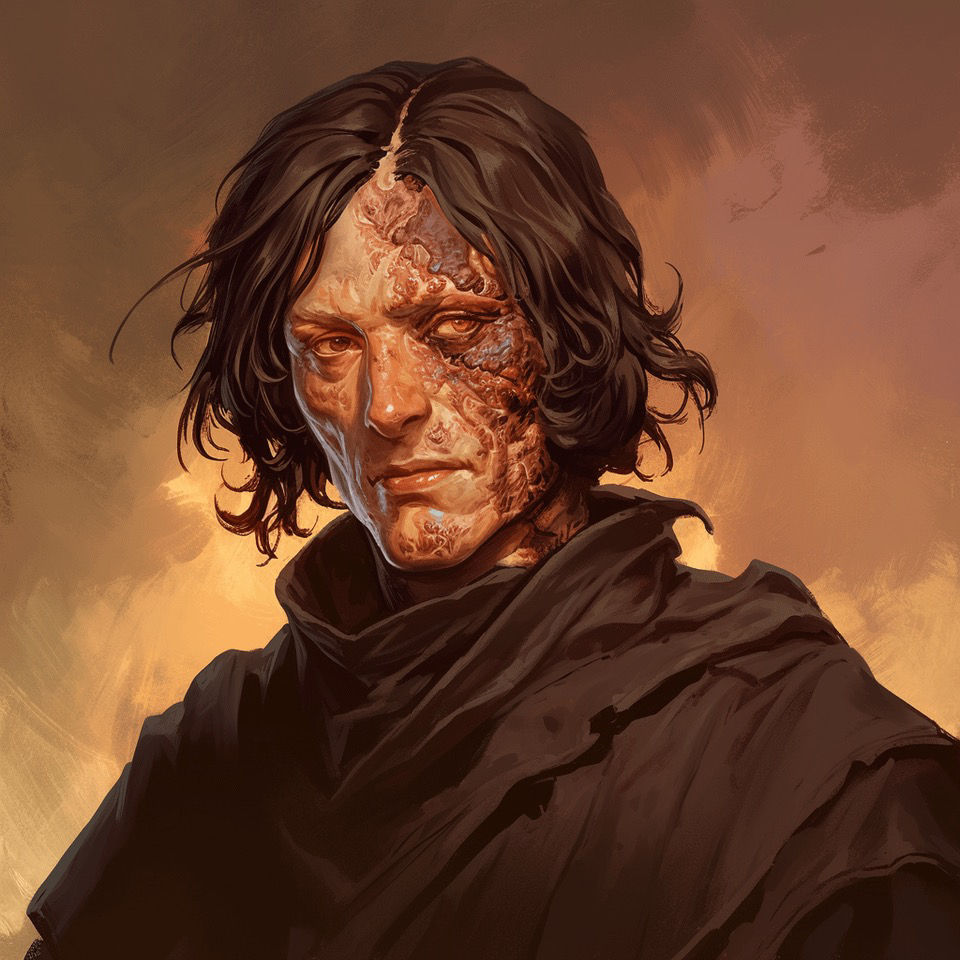
Torgan stomps out of the new Burgomaster's office into the rain, leaving Dunlar bewildered behind him, pondering the newcomers choices. Torgan has no patience for clan questions — not today, and not from a Stonebreaker. He is clanless by circumstance and by choice, and he prefers it that way.
Vallaki is larger than the village of Barovia but no cheerier. The streets are wet, the faces are closed, and the Blue Water Inn is shuttered. Torgan wanders the city center until he finds a small cafe — more of a wine shop that has given up on wine — and takes a seat at the counter. A heavyset older woman named Margarethe sets a bowl of wolf stew and warm bread in front of him without being asked. He does not object.
Margarethe fills him in on what little news there is. The wine has stopped coming, and with it, much of the city's thin comfort. The Wizard of Wines vineyard to the west belongs to the Martikoff family — Urwin and his wife went to investigate the missing shipments, and neither has returned. People are getting desperate. Torgan pays his five silver, declines to mention he arrived with elves, and waits for nightfall before making his way toward St. Andral's Church, hoping that he may find shelter there.
⚔
Duster is unchained in a back room of the Burgomaster's house, in the company of two guards who are very excited about the prospect of treasure. The kenku has been bribing his way toward freedom with promises he is not entirely sure he can keep.
He leads them on a winding tour of the city — the town square fountain, dry and only partly repaired from its damage. The ugly stone angel is coated with moss from which Duster pretends to draw a note directing them to the Cow Gate. Here, along the southern wall of the city smelling of livestock and mud, Duster pretends to find another note. This one returns them to theBurgomaster’s mansion. The guards, Timoteus and Geogren, grumble the entire way back. Finally, they make their way back to the attic of the Burgomaster's house.
Cautiously, the guards sneak Duster in through the kitchen and up the back stairs to the attic. The detritus of the Vallakovich family has been, for the most part, removed. At the end of the cavernous space, Duster spies the sigil painted upon the door. He is wary of it, throwing a loose shoe at it, hoping to trigger it if it is still empowered.
Nothing happens.
He enters the room. The clutter of Valdimir’s laboratory is missing and the teleportation circle has been rubbed out. Worse, the chest is long gone. Behind Duster, the guards are fuming. Duster pretends to dig out a note from between the planks of the floor and sends them to the Burgomaster's office, buying himself one final chance.
In the office, with a letter opener fashioned into a crude lockpick and a length of wire stripped from a painting, Duster works at the safe. He fails twice. On the third attempt, he comes achingly close — and a familiar voice from the bookshelf says, cheerfully, "Oh, that was so close, boss."
The imp has been watching. He has also been reconsidering his standing assignment to kill Lord Strahd, which he has concluded is unlikely to succeed. He offers Duster a deal: release him from the charge, and he will help. Duster counters: help me not hang tonight, and then we'll talk. The imp spots the ugly necklace taken from the hags and his eyes go wide. He explains — helpfully, if ominously — that it is a hag's eye, and that looking through it allows one to see things.
Duster peers through it. He sees Dunlarr coming up the stairs.
Duster charges him with the letter opener, drawing blood. One guard hurls his spear at the imp but misses, The imp, feeling threatened, stings one of the guards to death. The surviving guard shouts for help. Duster, still wounded from his tussle in the Village of Barovia, has no good options.
Then Dunlarr walks in.
Duster begins spinning a tale to Dunlarr: the guards were attempting to rob the Burgomaster’s safe, and used Duster, knowing he could pick locks. Dunlarr looks at the letter opener and wire jammed into his own safe, and his expression does not suggest he is entirely convinced. The guard — Timoteus — attempts to explain what actually happened, but is so scrambled in his defense that Dunlarr confiscates his weapons and sends him downstairs. Dunlarr then wheels to confront Duster to produce eighty gold or go back to his cell.
Duster begins, “I have kept your tax money safe…could my freedom be a reward? You can take this, as well.” The kenku produces eighty gold and places it on Dunlarr’s desk. The dwarf takes it. “Right, Duster, I thank you. Now back to your cell.”
Sputtering, “That’s not how a bribe works!”
“Let’s call it a fine for bad behavior,” chuckles Dunlarr, “Now, back you go, Duster!”
Duster dashes out into the hall and dives for the window.
Dunlarr tries to grab for the rogue, but misses. Duster crashes through the glass, hits the ground, and somehow survives. Behind him, Dunlar's voice carries across the city: "The prisoner is free! Find the Kenku!" Duster, pulling on his wine merchant disguise as he runs, slips into the back alleys of Vallaki and disappears. The imp, impressed, floats along behind Duster.
⚔
At the Amber Temple, things have gone sideways. Bayleaf, Komzin, and Raktha have killed one of Exethanter's nothics and now stand before the lich himself, who is not pleased. He is not the sort of lich who shouts — his displeasure arrives cold and precise, with the weight of centuries behind it.
He tells them they should not be in his private chapel, that they have killed one of his brothers, and that he wants to know what in all of Barovia they think they are doing. Komzin points out, reasonably, that they were attacked first. Exethanter counters that they should not have been there to be attacked. The argument has no winner.
He gives them their orders. Fekre, goddess of plague, has been freed from her amber prison and is somewhere in the lower reaches of the temple. She is weakened — centuries without worship will do that — but she cannot be allowed to run loose. He wants her recaptured. He hands Komzin a token that will keep the flameskulls from attacking, then slams the door.
The party moves back through the gallery. The flameskulls keep their distance. Then, from ahead, comes the sound of something enormous — heavy footsteps that vibrate the black marble underfoot. A golem fills the hallway, twenty feet of amber-colored stone grinding slowly toward them. Komzin holds up the token. The golem stops, turns, and resumes its patrol in the other direction. The marble beneath its feet is crushed to powder wherever it has walked.
Behind a door at the far end of the hall, a man is wailing to be released.
By Fekre.
The party pushes through. The room slopes like a lecture hall, rows of empty chairs facing a speaking platform where a man sits alone. He looks up with desperate hope when they enter. He is clearly ill — hair coming out in patches, skin mottled with raised sores, eyes streaming, cheeks hectic with fever. He rises and comes toward them, and Bayleaf, can see exactly how sick the man is. The others do not move fast enough.
He embraces Rakthe.
Rakthe is overwhelmed by the stink and the heat of the man. Sores begin to bloom across her already acid-burned skin. The man — Vilnius, he tells them — is effusive with gratitude. He tries to shake Komzin's hand. Komzin pulls back in disgust. Vilnius then tries to embrace Bayleaf. Bayleaf sidesteps him with impressive agility, and feels the fever radiating off the man as he stumbles past.
Vilnius explains everything, at length and with feeling. He has spent five years searching for Fekre. She promised to heal him once she was free. He freed her. Now he needs to carry a shard of her essence — an amulet, gold and ornate, glowing with pale green light — out of the temple, at which point she will cure him and he will spread her worship throughout Barovia. He offers the amulet to Bayleaf. He is very insistent.
Bayleaf declines. The party explains, with great diplomacy, that getting out of the temple at all is already difficult, that a weakened goddess probably cannot force her way past an amber golem and a company of flameskulls, and that there is a priest elsewhere in Barovia who might be able to treat his illness. Bayleaf's persuasion is extraordinary. Vilnius weeps. He has spent five years on this. He sinks to his knees. He agrees to come with them.
Then he tells Rakthe that the goddess would find them — their scales, their bearing — to be a worthy sacrifice. They would make Fekre strong enough to leave on her own. It is, he says, a great honor.
Rakthe kicks him off the ledge.
It is a thirty-foot drop. Vilnius survives, barely, and shouts up at them from the floor of the chamber that she will suffer as he has suffered. He takes the amulet with him as he falls. The party watches him stagger toward the temple stairs. Then they hear a shriek.
Rakthe runs after him and finds the answer at the bottom of the steps. Vilnius is there, but he has aged decades in seconds — his skin crumbling, his frame desiccated, bits of him breaking away from the impact of the curse the amulet carried for anyone who tried to leave with it. He is dead. He looks ancient. The amulet lies close by, its pale green glow unchanged.
They want very badly to pick it up.


Comments